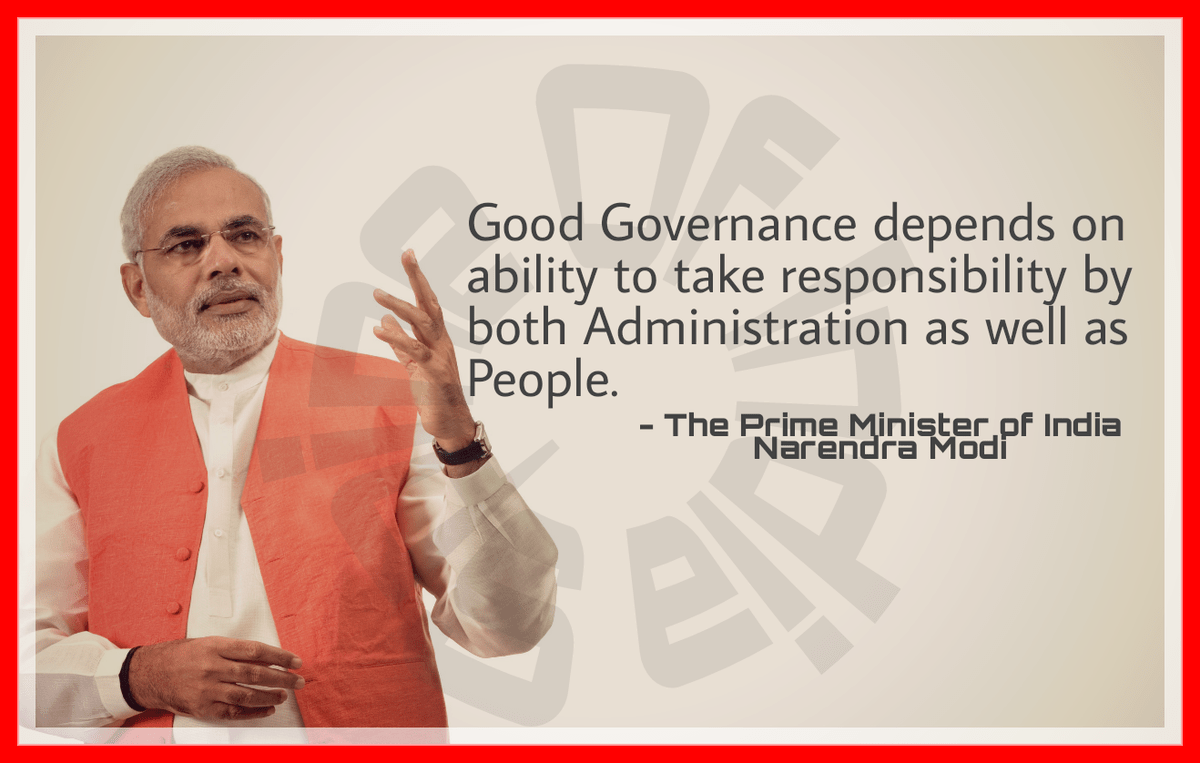
Every nation wants to promote a set of value systems. It directs, guides and regulates the government by determining future goals. On the basis of these goals, policies are modified or changed. The term governance refers to the changing landscape of government and public administration. It signifies the process of selection, replacement, and implementation of the policies for the development of the country.

The constitution of India protects the social, political and economical rights of the indian citizen. Hence, the term ‘good governance’ refers to the change in current policies of government and public administration to provide better opportunities to the citizen in social, political and economical aspects of life. Good governance entails efficiency of public services, accountability of bureaucracy, transparency in decision making. It designs the legal framework for the development of the country and provide justice to the citizen to protect their fundamental rights. It aims at removal of poverty and expansion of employment opportunities etc.
People’s Participation
India is the land of diversity. By comparative standards, it is one of the most successful democracies. Any single uniform approach can not work in an enormous diversity like india. But from the last few decades, an uniform culture is being followed where indian citizens depend on government for almost everything. The involvement and participation of people is essential to break this culture of dependency. The constitution of india has given power to indian citizens to exercise legitimate control over governance matters that affect their lives. The development of the country and the empowerment of the countrymen require the active participation of the people. They have given sufficient freedom to the citizen to express their views. Government attends perceptions from a broad diversity of people regularly to develop policies and design decisions for democratic process.
Continued….
 SPINE OF INDIA
Leave a comment